Technical Information
Everything you need to know about the class and the boat along with FAQs
Class Rules & Governance
All 2.4mRs must comply with the International 2.4mR Class Rules, which specify hull dimensions, materials, rigging, control systems, measurement standards, and equipment requirements to preserve strict one-design racing.
The International 2.4mR Class Association (ICA) is the global governing body recognized by World Sailing. It administers class rules, measurement procedures, boat certification, and the 2.4mR World Championship cycle.
At the national level, the U.S. 2.4mR Class Association acts as the Certification Authority under ICA delegation. The U.S. association maintains domestic member rosters, sanctions national events, and ensures compliance with ICA class rules for U.S.-registered boats.
Tuning Guides
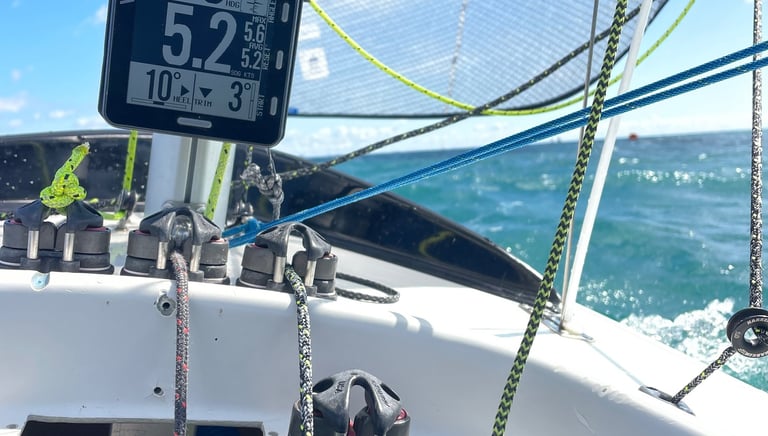
While tuning considerations vary by boat and conditions, the following resources offer established starting points for sail trim, rig settings, and control optimization. Always validate against your own performance and class rules.
These guides are reference points, not replacements for personal experimentation and measurement certification
Fleet Technical Support
The 2.4mR Midwest Fleet maintains collective knowledge on practical issues including:
Routine maintenance: rigging inspection, sail care, line splicing, and common repairs
Transport: options for moving 2.4mRs safely and efficiently
Cost considerations: typical price ranges for boats and sails, with attention to condition and age
Fleet members regularly exchange expertise — ask the fleet for specific recommendations or hands-on help.
FAQ
What is the 2.4mR?
The 2.4 Metre is a single-handed, one-design keelboat developed to provide close, skill-based racing in a compact and highly controlled class. The boat features a deep keel with a high ballast ratio, a fractional sloop rig, and simple but precise sail controls that reward tuning, boat handling, and tactical decision-making. The 2.4mR is sailed worldwide under international class rules and is well suited to both adaptive and non-adaptive sailors, making it a widely used platform for inclusive keelboat racing and high-level competition.
Why is the 2.4 sometimes called "the great equalizer"?
All controls are positioned in front of the helmsperson, making each trim control readily accessible. A sailor can steer using either their hands or feet. The sailor's weight is near the center of gravity; hence, the size and fitness level of the sailor have minimal impact on speed. In other words, the 2.4mR is considered the most inclusive sailing boat currently available, allowing all competitors to be virtually equal on the water, regardless of their age, physical strength, or gender. The high demands on each individual stem entirely from pure sailing skills, focusing on strategy, sail trim, and speed.
When are the series races scheduled?
Races are held weekly from May through September, Sunday mornings (weather dependent).
How do I maintain my boat?
Regular cleaning and checking rigging keeps your 2.4 race-ready. Fleet wide we have a lot of experience in fiberglass repair, hardware upgrades, line splicing and problem solving. All you have to do is ask and someone will have that "skill" you need.
How do I transport a 2.4?
There are several options for moving your 2.4 over land. Open trailer, enclosed trailer and even in the bed of a pick-up truck. As a Fleet, we have several options available. Sometimes it's as easy as sharing a trailer.
How much does a 2.4 cost?
As you may be aware, a boat is essentially a hole in the water where you throw your money, and a 2.4 is no exception, other than being a smaller hole. With any boat, the value comes from the manufacture, how it was maintained, damage history and age (although not a factor for well maintained boats).
Bottom line, a used 2.4 can range from $1000 to $15,000. Sails will set you back between $1400 and $1800 (depending on manufacturer and type). If you replace every line on the boat you can expect $200 to $400. Don't forget your personal gear (foul weather gear, splash top, dry suit, life jacket, electronics) add up quick. If you are just getting started, a used boat with used sails is just fine. Its about getting out there.
Contact
Questions? Reach out to our fleet team.
© 2025. All rights reserved.